The Market Research Opportunity: Weight Loss Pills
What could oral GLP-1s change about who starts, switches or stays on obesity treatment?
Would someone who turned down a weekly injection reconsider obesity treatment if they could take a daily tablet instead? For some people, the prospect of an injection may have been the main barrier. For others, the decision may have come down to cost, concerns about side effects or uncertainty about what to expect. The arrival of oral options gives pharma teams and fieldwork agencies an opportunity to find out when the format makes a difference.
Even two tablets can fit differently into someone’s day. Oral Wegovy is taken on an empty stomach, with a wait of at least 30 minutes before food, other drinks or other oral medicines. Foundayo can be taken with or without food. For someone who works shifts or already takes several medicines in the morning, those details could influence which option feels more manageable.
Research questions
Starting treatment: Would a tablet change the decision for someone who previously declined an injection? How much would that depend on cost, expected benefits or concerns about side effects
Switching treatments: What prompts someone to move from an injection to a tablet? How does their actual experience compare with what they expected when they switched?
Staying on treatment: What helps people keep taking a daily tablet? When someone stops, what role did the dosing routine play in this decision alongside side effects, affordability or access to follow-up?
Who to recruit
At QQFS, we support healthcare market research across 23 markets, including the US and UK, where these weight loss pills are available by prescription. For a study like this, we’d start by identifying who has faced the decision that the research needs to understand.
People who discussed an injection with a healthcare professional and declined it can explain what held them back. Those who switched to a tablet can describe what changed in their daily lives. People who stopped treatment can explain what made it difficult to continue. Speaking with healthcare professionals who manage obesity adds another perspective on which options come up in consultations and how patients weigh them up.
For a multi-market brief, we’d assess which groups are feasible to recruit in each country. Where tablets are already available, for example, researchers can speak to people who have switched. In markets where access is more limited, the study may be better placed to explore what patients and prescribers would consider if a tablet became available.
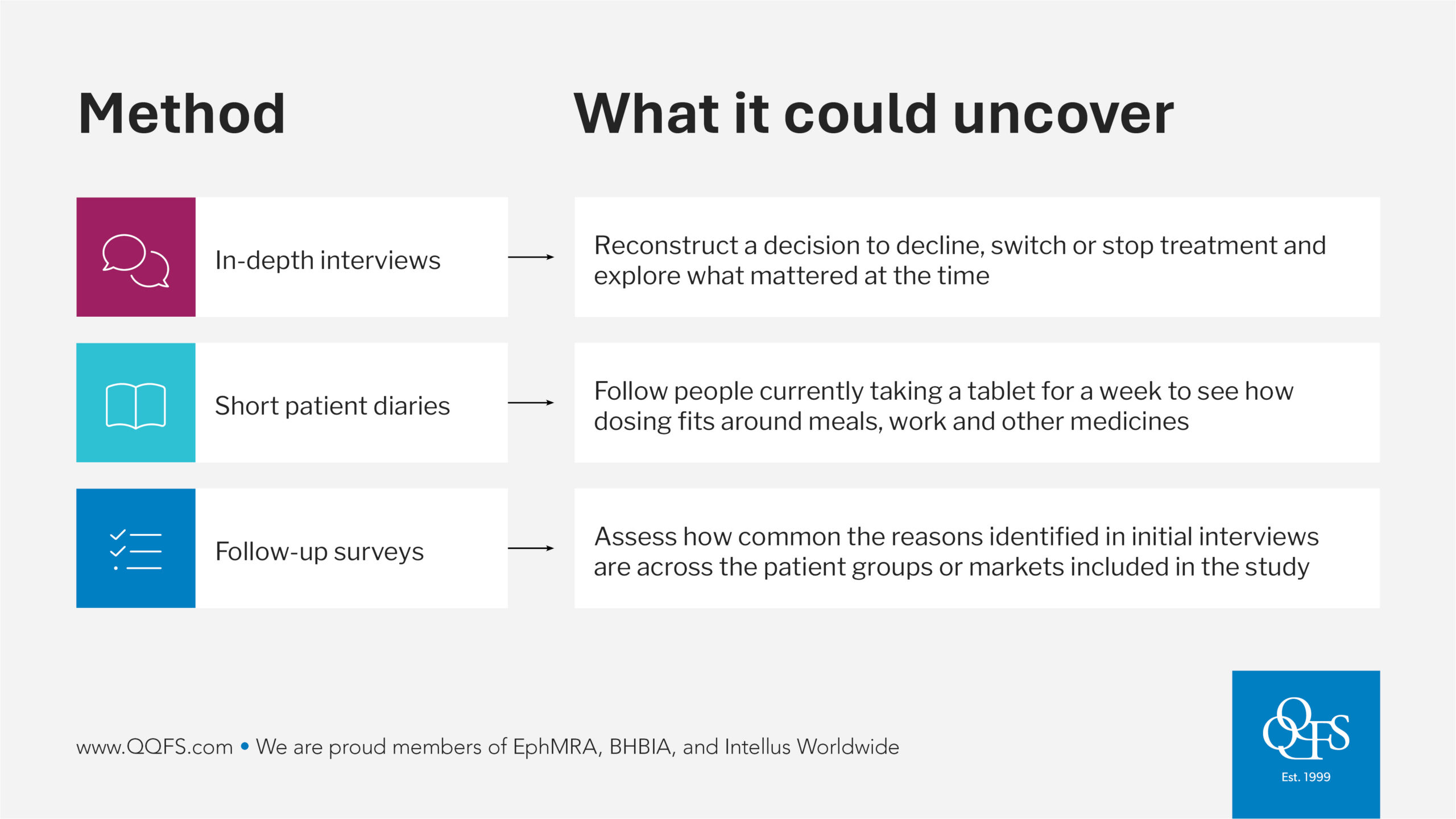
Research methods
If you’re scoping an obesity study, QQFS can help you define eligibility criteria, assess recruitment feasibility by market and reach the patients and healthcare professionals who can answer your brief. Discuss your fieldwork brief with QQFS.
Research methods
ObesityWeek runs 14–17 November 2026 in Washington, DC. Scheduled presentations include research on what patients and healthcare professionals value in obesity medicines, as well as early experiences with oral semaglutide among people who started treatment through telehealth. View the ObesityWeek programme.